Two Months, 11 Projects, ~320 Commits: What I Built with Claude Code
Between late August and late October 2026 I ran most of my side projects through Claude Code. I didn't just use it as a chat window. I used it as a pair programmer that commits, tests and packages. When I went back through the git history I found about 320 commits co-authored with Claude across 11 projects. On top of that I'd built a set of home-made plugins, skills and hooks that now shape how every session on my PC runs.
This post covers what got built, what worked, and the tooling I made to keep the AI fast and cheap.
These are personal projects. None of them is published or live yet. The videos and screenshots below come from emulators, demo data or each project's own docs.
The highlights
JobFinder: rewriting a job tracker from scratch ~170 commits
The biggest project was rewriting first2apply, an Electron job tracker, as JobFinder: a Kotlin Compose Multiplatform app for desktop and Android. Claude worked through it phase by phase:
- an off-screen browser pool that scrapes LinkedIn, Dice, Remote.io and Hiring Cafe, with golden tests for every parser, and a local Ollama model that parses any custom job site;
- a Room database with full-text search, plus an embedded Ktor server so the phone can pair with the PC over the LAN and keep working offline;
- AI job filtering and ATS resume scoring. Each task can use a local model, free online keys, OpenCode or Gemini through Antigravity, so it runs without a paid API key;
- a Chrome/Edge extension that autofills job application forms;
- an MCP server, so other AI agents can query my job data;
- full packaging: an MSI that upgrades in place, a Linux .deb, a shrunk APK, CI I can run locally, and device tests with screenshot goldens.
It's the kind of project I would never have finished alone in two months.
DevExAI: an AI toolsmith for a whole company 38 commits in 3 days
The idea: anyone at a company drops a tool idea into team chat. An AI pipeline checks it's safe, researches it, builds a ready-to-install tool for the company's AI coding assistants, and publishes a blog post crediting the person who had the idea. In three days it went from proposal and slide deck to a working Slack bot, a review dashboard, a builder that writes the files for approved ideas, a devexai install <tool> command, a Windows tray app and a signed self-updater. Read the full DevExAI case study, with the end-to-end flow video.
TVFreedom: freeing Android TVs from bloat 32 commits
It started as scripts to debloat my Xiaomi TV and Mi Box. It became a phone app that finds any Android TV on the network and debloats it over adb, with backups you can restore. There's even a Termux path that installs Claude Code on the phone itself.
An email agent that fights my support cases 28 commits
For disputes with companies, I built an agent that searches my mailbox for context, drafts the next email, and walks a case up an escalation ladder, up to a consumer complaint. I drive it from Telegram: /newcase, preview the draft, reply to revise it. Every address in a draft has to come from a verified source. That check is in code, not left to the prompt.
Smaller builds
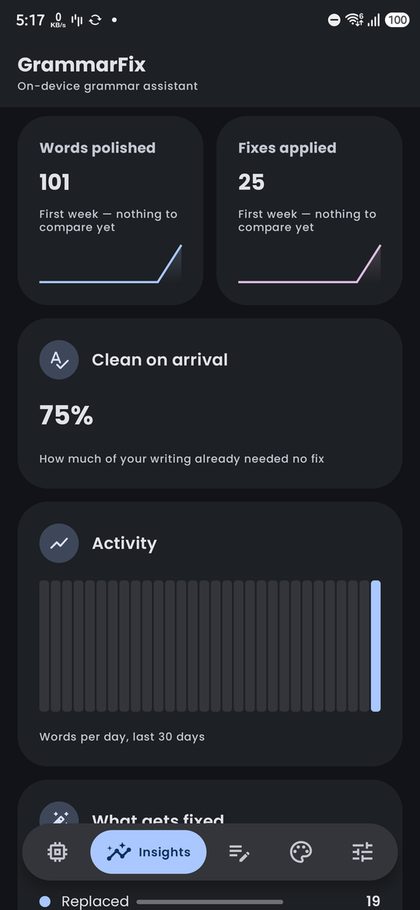
- GrammarFix: a Grammarly-style checker for Android that runs on the phone. An on-device Qwen3 model suggests fixes in any app, and no text leaves the device.
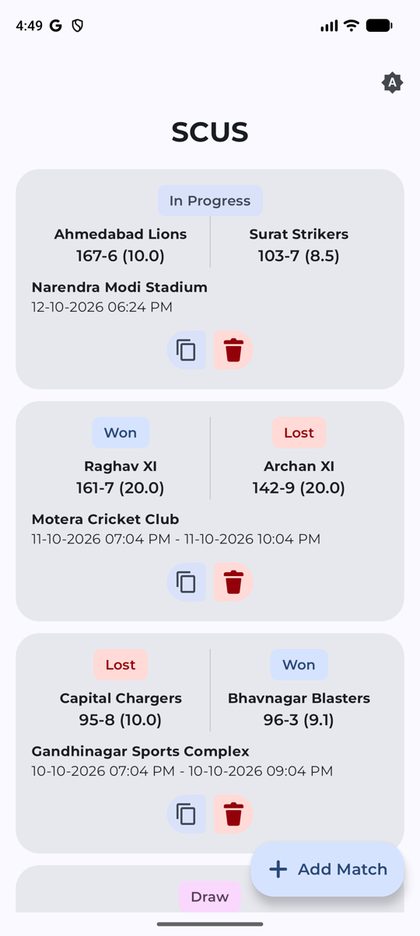
- Simple Cricket Umpire Scorer: finished its Compose Multiplatform migration with Material 3 Expressive motion, shared-element transitions and celebrations.
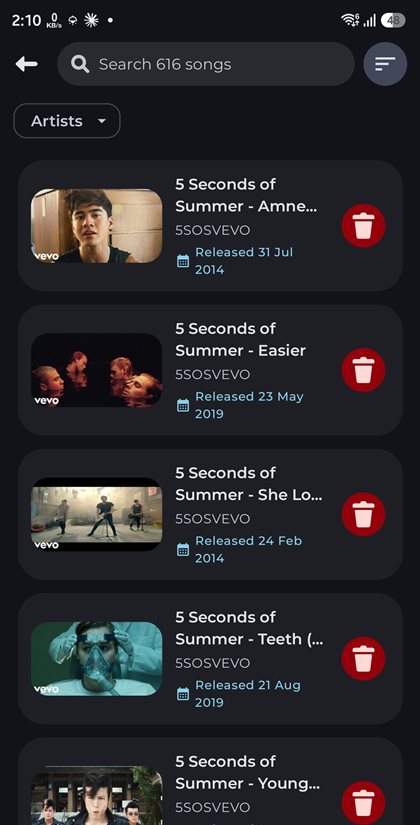
- BulkYoutubeSearch: moved to Compose and gained a "found songs" library with search and a player.
- x-digest: reads my X bookmarks without logging in, filters them with a local model, and gives me a one-table brief. It doubled as my test bench for comparing local models.
- CarBox_Debloater and a self-hosted RustDesk server: smaller hardware and infra jobs, done the same way.
The tooling I built around Claude
The projects matter, but what changed my day-to-day most was the tooling I built around Claude.
A local model that saves tokens
I run a small local model through Ollama and wired it into Claude Code with hooks:
lm-askanswers yes/no or pick-one questions about a long log, so Claude doesn't read the whole thing.jglis local semantic code search, andlm-rankpicks which search hits are worth opening.lm-diffcheckruns each project's rules over a diff before every code review.- Hooks compress long command output, stop retry loops, and block raw log dumps.
- The token-saver plugin adds
/tool-savings, which reports what all of this saved.
All of it now lives in one open-source repo, agent-workflow, with my other skills, hooks and agent config. Its installer sets up Ollama, the model, the tools and the hooks, plus the skills for Claude Code, Gemini CLI, Codex, Copilot CLI and OpenCode, on Windows, macOS or Linux (on Windows, run it from Git Bash):
git clone https://github.com/raghavsatyadev/agent-workflow.git
cd agent-workflow
bash install.sh
plan-keeper: memory across sessions
plan-keeper, also in agent-workflow, is a plugin that keeps a short .claude/PLAN.md in each project. It updates the plan after each turn and re-injects it after /clear or compaction, so a new session picks up where the last one stopped. Any question Claude leaves unanswered is saved to DECISIONS.md so it doesn't get lost.
Android Agent Kit
I pulled the rules, hooks, skills and local CI from one app into a drop-in Android Agent Kit, now rolled into four of my projects. It includes per-project skills for Material 3 Expressive patterns and for testing on devices without leaving them in a messed-up state.
Skills
- agent-routing picks the cheapest model that can do each subtask: local model first, then Gemini Flash, and Sonnet or Opus only for design-heavy work.
- ats and ats-smart give a scripted ATS score and a recruiter-style resume review with exact rewrites.
- local-model teaches every agent to use the tools above.
What I took away
The big rewrites worked because every phase ended in a working, tested commit. Claude is at its best with a clear plan and a short feedback loop.
The email agent's address check, the duplicate-idea gate in DevExAI and the diff checks before review all moved from "please remember" in a prompt to code that enforces them.
Local models for verdicts, free models for mechanical work, and the big model for design. That kept costs down without slowing anything.
Plugins, hooks and skills paid for themselves within days, because every project after that started faster.
Two months ago these were half-finished ideas in a folder. Now they're working builds with tests and demos, and the next step is getting some of them ready to publish.